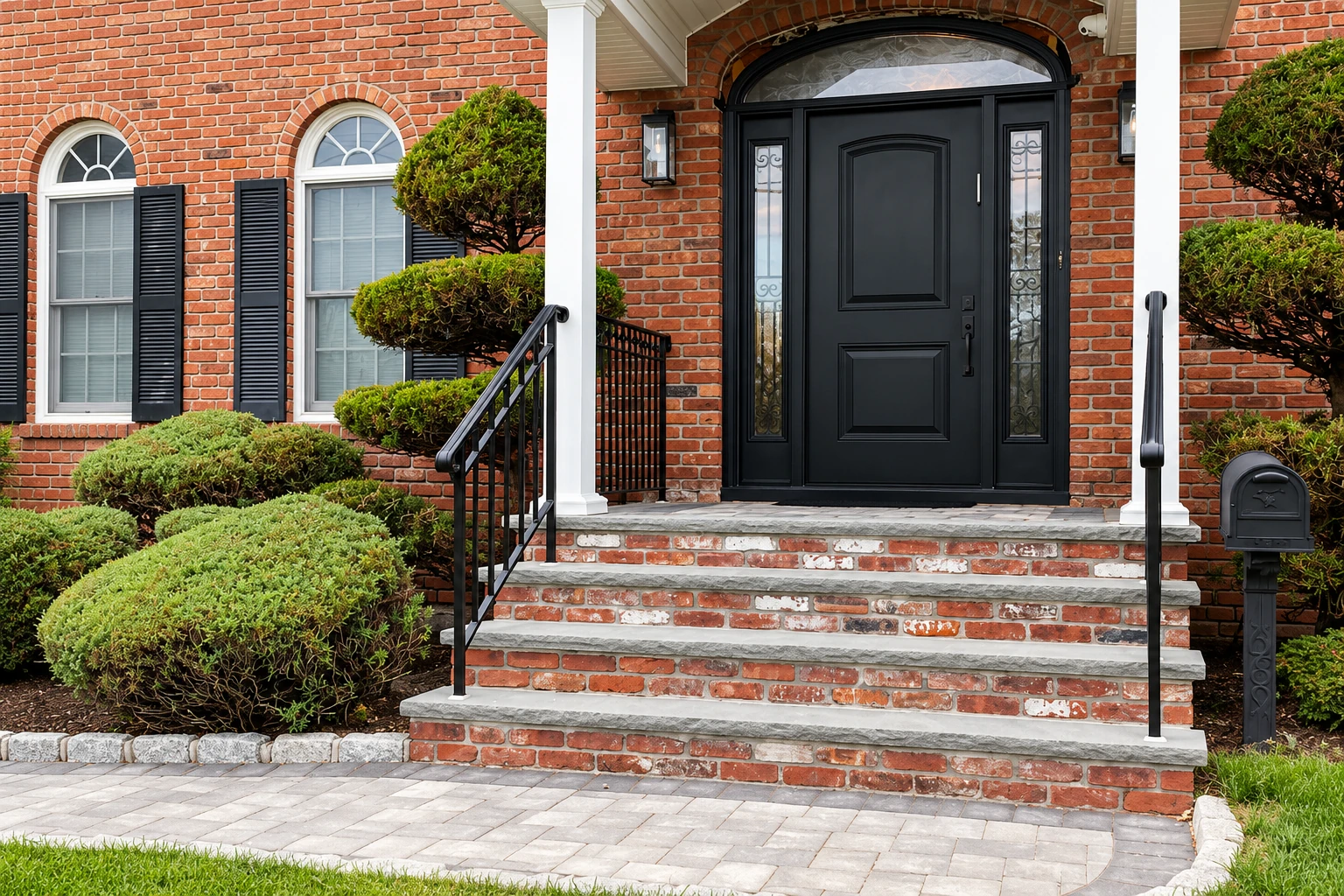
Concrete steps construction in Hoboken NJ - a front stoop that stays level
Front steps tipping, crumbling at the edges or pulling away from the door? We build new concrete steps on a packed base so they sit firm.
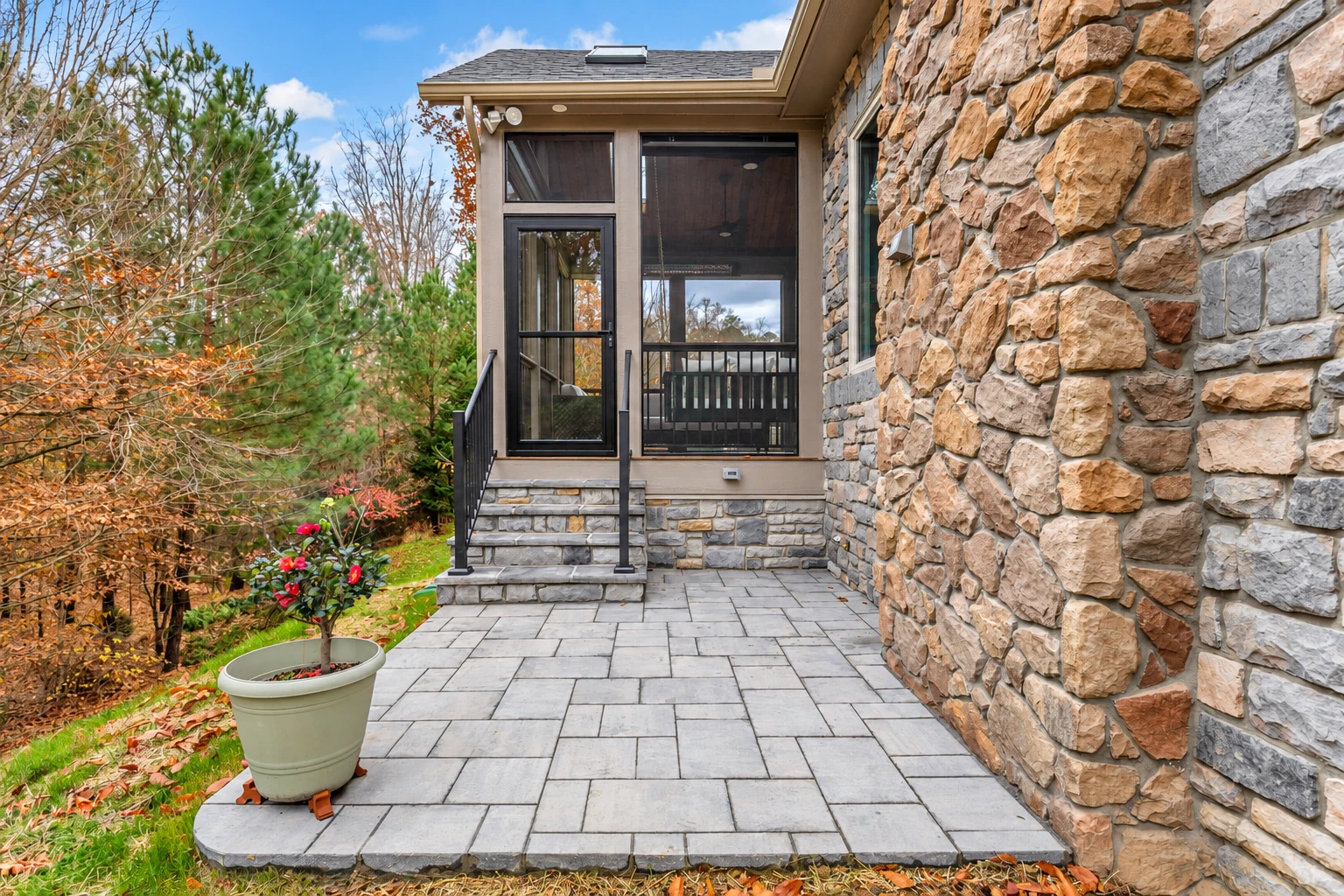
What does it take to replace concrete steps in Hoboken?
Concrete steps construction in Hoboken, NJ means building a new set of steps that rests on the ground, ties into a landing or the foundation of your house, or spans like a stair. Getting that support right is what keeps new steps from sinking or pulling away from the door the way the old ones did.
Most people call when the old steps have started to lean, chip or open a gap at the house, and they want to know what new ones cost and how long they'll be without a front entry. The price moves mostly with a few things: precast or poured, how the steps are supported, how much old concrete has to come out and how tight the space is to work in. The schedule turns on whether a permit or another approval has to come first, on the weather around the pour, and on curing, the wait while fresh concrete gains strength before it takes full weight. We check early with the city on what your job needs, and the estimate at your house is where you get the number for your steps. If the walk at the bottom is broken up too, we can redo the sidewalk alongside the steps.
How we handle concrete steps construction
First I figure out what your steps will rest on, the ground, a landing or the house's foundation, because that decides the rebar, the steel inside that keeps cracks from spreading, and the footing and frost work underneath. Then we weigh precast against poured with you, and the quote says which support system it includes so you can hold it up against anyone else's. Once the old steps are out, our crew digs past the loose dirt and packs the base, because steps set on fill that was only raked flat settle right along with it. For poured steps we build the forms so the treads shed water away from the door, pour outside the hottest part of the day so the top doesn't dry weak and dusty, and give the treads a broom finish, a light scratched texture that grips under wet shoes. If the budget gets tight, I'd rather you go plainer on the finish than cut the base, because nobody sees the base on day one and it's what decides whether the steps are still level years from now.
Steps lean on whatever is behind them, so sometimes the work around them comes first. When the wall an old stoop ties into is too far gone, new steps wait on foundation installation, and on an addition or a new back room we plan the steps alongside the slab foundation building so the floor and the landing meet at the door.
Precast steps
Precast steps are hollow units made off site, so they cost less and are easier to set, which suits a standard entry where price matters most. They come in set sizes, so they're a weaker fit for an odd-height door or a wide stoop.
Poured in place
Poured steps cost more, but we build the forms to your entry, so they fit a much wider range of sizes, landings and older stoops. They're the usual pick when the steps have to match the house or tie into a landing.
Concrete steps construction in Hoboken starts with the city
Hoboken's Construction Code office issues permits for new construction and for changes that affect egress, the way out of the house, but its list names siding, roofing and decks and not concrete steps, so whether your job needs one is a question for the office staff, who help owners who aren't sure. Work here also often needs zoning, historic or health approvals before that permit is issued. If the house sits in a locally designated historic district or is a landmark, the Historic Preservation Commission reviews exterior changes the public can see, and its guidelines list stoops and call for its approval before the work starts, permit or not. That's why on older stoops we ask early about historic districts, and we check with the city's office on what your job calls for, pull the permits that fall to us and tell you early if plans or another approval have to come first.
Plenty of front steps here meet the sidewalk, and the city requires a sidewalk opening permit before anyone removes, repairs or replaces a sidewalk, so if the walk has to come up, that goes into the plan too. Tight lots and old stoops are everyday work for us, and we see the same on jobs in Jersey City and Union City, where the room to work decides how the old concrete comes out.
Steps, stoops and landings
Why call us for concrete steps
I look at every job myself
I come out to see every set of steps before we quote, and our crew lead runs the work on site once we start. You hear the plan from the person who checked what's under your stoop, and the crew building it has one lead who answers for it.
Learned on Hoboken stoops
I started out pouring steps and patching walks for neighbors here, and we've run it as a business since 2017. Most of what I know came from taking apart why old concrete failed, which is why I start with what's underneath.
Licensed and insured in New Jersey
New Jersey has businesses that do home improvement work register every year with its Division of Consumer Affairs, and we're fully licensed and insured. That matters on a stoop job, where the crew works at your door and right beside a public sidewalk.
To get started, send us your details or call (201) 502-5351 with your address, how many steps you have, a few photos of the entry and whether the house is in a historic district.
(201) 502-5351Get an on-site estimate for new concrete steps
We get back to you within one business day to set a time, and I come out to look at the steps myself. The estimate is free, done at your house and comes with no obligation.
Questions about concrete steps in Hoboken
How much does it cost to build new concrete steps in Hoboken?
Installing concrete steps in the New York City area usually costs about $700 to $5,600 per job. Precast tends to land lower and poured higher, and the number of steps, the work under them and how much old concrete comes out move it within that range. The estimate at your house gives you the figure for your steps.
How long do concrete steps last?
Concrete steps usually last 30 to 40 years with proper care and upkeep. That long life depends on what's under them and how they're treated each winter, so we talk through care with you before we leave the job.
Can I use salt on new concrete steps the first winter?
Industry guidance says to skip deicing chemicals the first winter, then use them in moderate amounts after that. Deicers leave the surface wetter and add more freeze and thaw cycles, which wears the top down faster. The same guidance suggests considering a commercial breathable sealer for the surface.
Can concrete steps be poured in the winter in Hoboken?
They can, but pouring outside in late fall, winter or early spring calls for caution when the concrete may freeze soon after it goes in while it's still soaked. We plan the pour for a stretch when a freeze right afterward is unlikely. You can also ask whether a quote uses air-entrained concrete, which holds tiny air bubbles that give freezing water room so stress doesn't build up.
Do I need a permit to replace front steps in Hoboken?
Ask the city's Construction Code office, because its permit list doesn't name concrete steps and the staff can tell you what your job needs. If the house is in a historic district, the stoop also needs the Commission's approval first, as covered above. We check with the city on both before we set a date.
What causes concrete steps to sink or pull away from the house?
Most of the time it's the ground under them giving way. Steps set on loose fill that was never packed settle as the dirt does, and steps without the support they needed drift away from the door. Water running toward the house makes both worse, which is why we sort out support and drainage before we talk about finish.
Talk with Premium Hoboken Concrete about your front entry
We answer (201) 502-5351 seven days a week, from early morning into the evening, so you can call before or after work.